Reinforced Surfaces for Demanding Work Environments
Industrial Concrete Solutions in Portland for warehouse floors, structural slabs, and reinforced surfaces subject to heavy equipment and constant operational loads
Concrete by Design installs industrial concrete throughout Portland, delivering floors and structural slabs that hold up under forklifts, pallet jacks, heavy machinery, and continuous traffic. You get surfaces built with reinforcement methods and finishing techniques designed for long-term durability in manufacturing facilities, storage buildings, and large equipment areas. The work accounts for load requirements specific to your operation, ensuring the slab can handle the weight and movement patterns your facility demands.
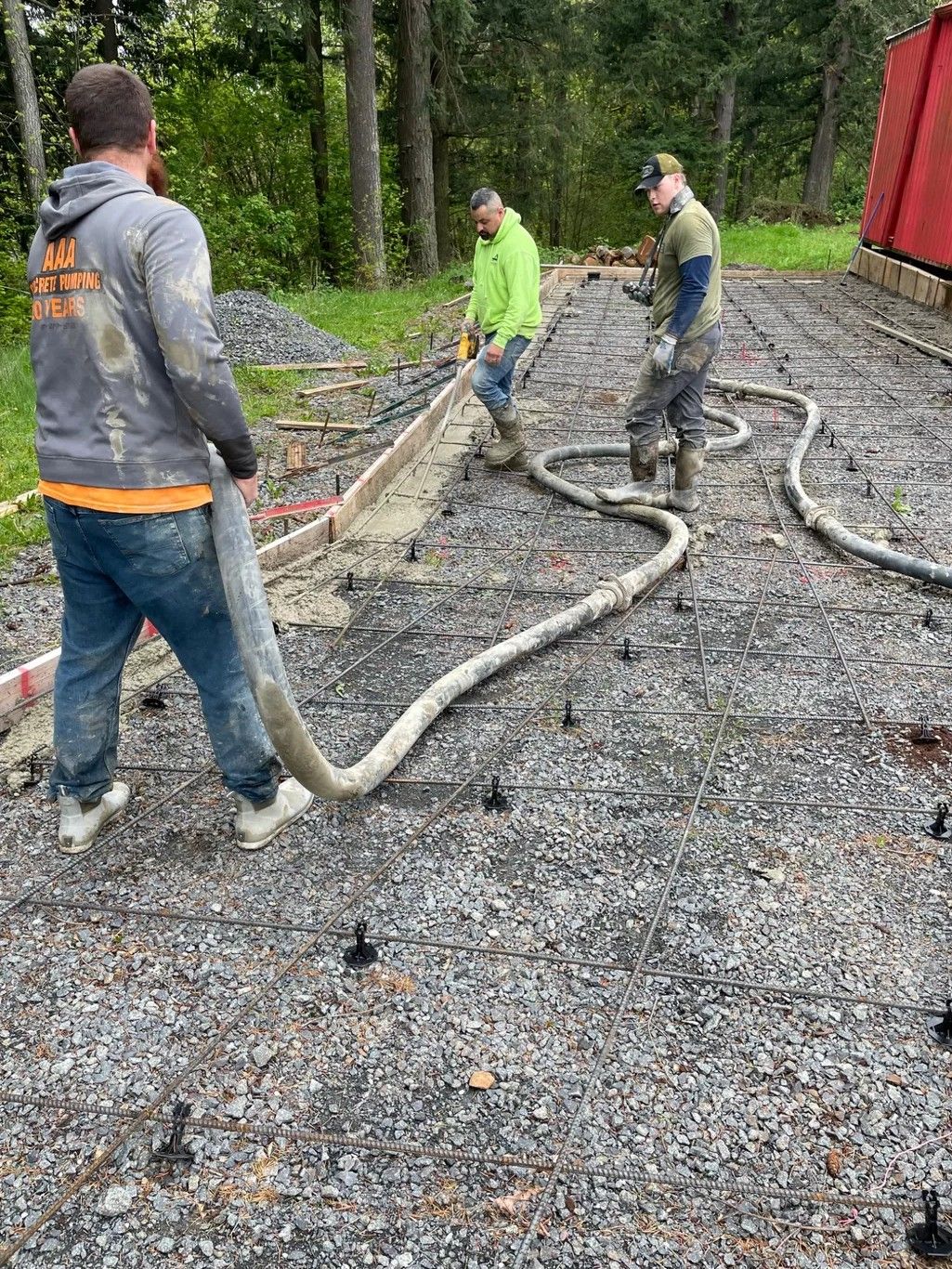
Industrial installations require precise planning. The crew evaluates soil conditions, calculates load-bearing needs, and installs reinforcement such as rebar grids or fiber mesh to prevent cracking under stress. In Portland, where moisture can affect slab performance, vapor barriers are placed beneath the concrete to block ground moisture from migrating upward. The surface is finished flat and level to support pallet storage, assembly line equipment, or heavy shelving systems without creating uneven spots that interfere with operations.
If you're building a new warehouse, expanding a manufacturing facility, or replacing a failing industrial floor in Portland, contact the team to review load specifications and project timelines.
What Industrial Concrete Installation Involves
Your project starts with a site assessment and review of your operational needs. The crew excavates to the required depth, installs a compacted aggregate base, and lays a vapor barrier to control moisture. Reinforcement is placed according to the calculated load, whether the floor will support static storage or dynamic loads from moving equipment. The concrete is poured in sections if the area is large, with joints planned to allow for expansion and contraction without causing structural damage.
Once the slab cures, you'll notice a flat, level surface with minimal deviation across large spans. Concrete by Design finishes industrial floors to tolerances that support rack systems, conveyor installations, and other equipment requiring a stable base. You won't see lippage at joints or surface waves that interfere with pallet movement. The slab is strong enough to resist impact from dropped loads and abrasion from constant traffic.
Joints are cut using saws after the concrete reaches initial strength, then sealed to prevent debris accumulation and moisture infiltration. Surface hardeners can be applied during finishing to increase abrasion resistance in high-traffic lanes. Epoxy coatings or other floor treatments are not included in this service but can be coordinated with specialized contractors after the slab is fully cured. This service does not include structural steel work, mechanical systems installation, or building envelope construction.
These are questions from facility managers and contractors in Portland who are planning industrial concrete projects.
Common Questions About Industrial Concrete
How thick should an industrial floor be?
Thickness depends on the load, but most warehouse floors are poured between six and eight inches thick, with additional reinforcement for areas under heavy racking or machinery.
What is a vapor barrier and why is it needed?
A vapor barrier is a plastic sheet placed beneath the slab to block ground moisture from reaching the concrete, which prevents surface dusting, coating failures, and corrosion of embedded metal.
When can you install equipment on new concrete?
Light equipment can be placed after seven days, but heavy machinery and fully loaded racking should wait until the slab reaches full strength at 28 days.
Why do industrial floors crack?
Cracking occurs when the concrete shrinks during curing or when the ground beneath settles unevenly. Proper reinforcement and control joints manage these stresses and keep cracks from affecting performance.
How does Portland's moisture affect industrial slabs?
High groundwater levels and frequent rain require vapor barriers and proper drainage around the building perimeter to prevent moisture-related damage to the slab and stored materials.
For industrial concrete installations in Portland, reach out to Concrete by Design to discuss load requirements, site conditions, and coordination with other trades involved in your facility construction or renovation.