Concrete Built for High Traffic and Heavy Use
Commercial Concrete Services in Portland for parking areas, sidewalks, entryways, and structural slabs exposed to constant vehicle and foot traffic
Concrete by Design provides commercial concrete services throughout Portland, installing surfaces that handle the demands of retail spaces, office buildings, apartment complexes, and mixed-use developments. You get durable slabs, parking lot sections, sidewalks, and loading areas built to withstand daily use without frequent repair. The work is planned to minimize disruption to your business operations, with scheduling that accommodates your tenants, customers, or construction timeline.
Commercial projects require careful coordination. The crew prepares the site, pours sections in stages if needed, and finishes surfaces to meet ADA requirements for slope and texture. In Portland, where wet conditions can delay pours and affect curing, the team monitors weather and adjusts the schedule to protect the concrete. Parking lot installations include wheel stops, curbs, gutters, and small retaining walls as needed. Entryways are sloped for drainage and finished with a broom texture to reduce slip risk.
If you're managing a commercial property or coordinating a construction project in Portland, contact the team to review site plans and discuss scheduling.
How Commercial Concrete Work Gets Done
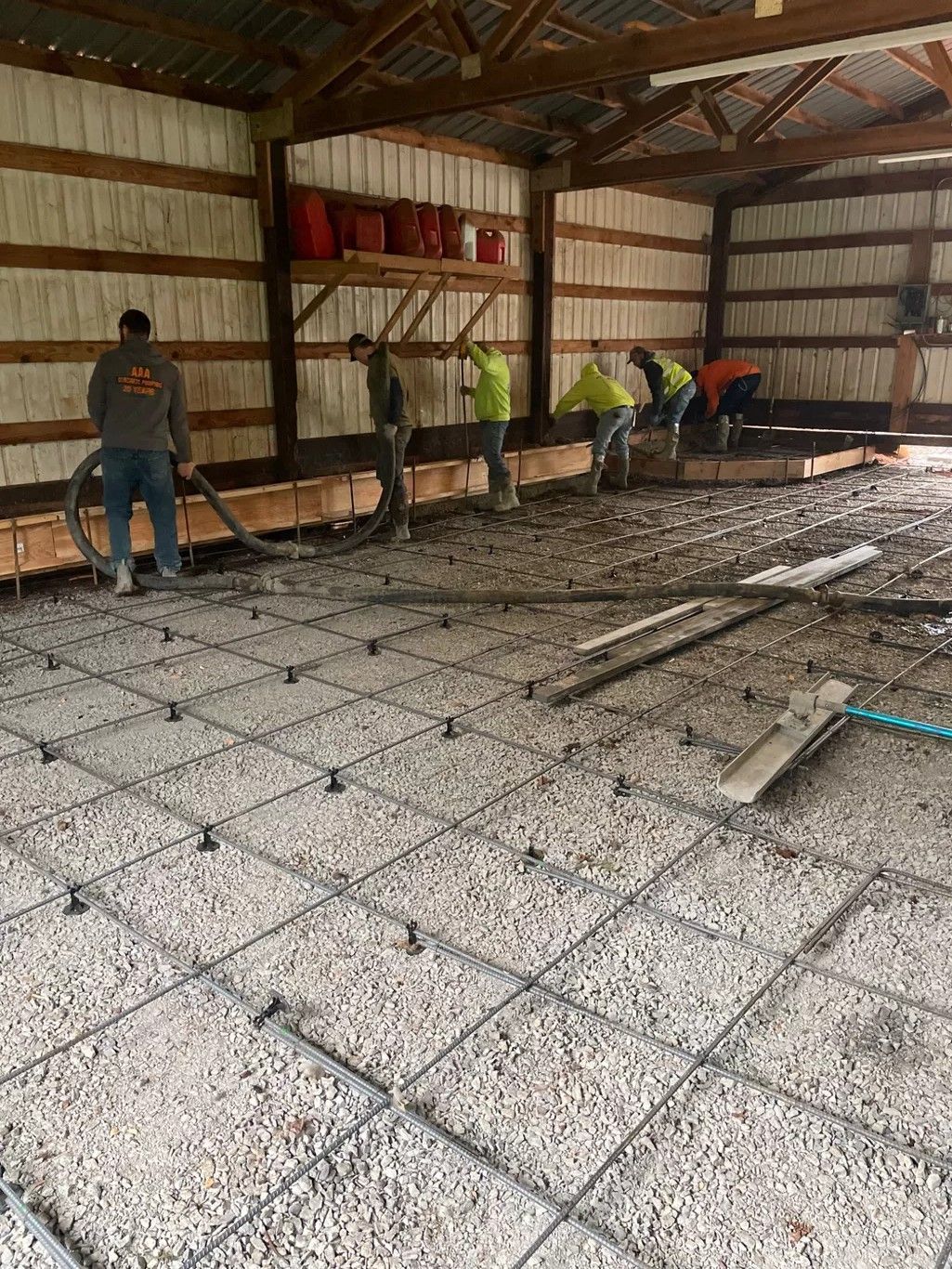
Your project begins with a site walkthrough and review of load requirements. The crew excavates to the required depth, compacts the base material, and sets forms to define the pour area. Reinforcement is placed based on expected traffic loads, whether the slab will support delivery trucks, forklifts, or pedestrian traffic only. The concrete is poured, leveled, and finished according to the project specifications.
After the pour, you'll see a level surface with proper drainage slopes, clean edges where the concrete meets existing pavement, and control joints cut at regular intervals to manage cracking. Concrete by Design coordinates with other trades when needed, such as plumbers or electricians working on underground utilities. The finished surface is ready for vehicle traffic once it reaches full strength, typically within a week for light use and longer for heavy equipment.
Curbs and gutters are formed and poured separately, then tied into the main slab. Wheel stops are installed using anchor bolts set into the concrete before it hardens. Small walls are built with rebar reinforcement and poured in sections. Sealing is available for high-traffic areas where oil, de-icing salts, or other chemicals may cause surface wear. This service does not include asphalt paving, striping, or landscaping work.
These are questions from property managers and business owners in Portland who are planning concrete work for their facilities.
What Property Managers Need to Know
How thick does a parking lot slab need to be?
Commercial parking areas are typically poured at six to eight inches thick, depending on whether they will support passenger vehicles only or heavy delivery trucks.
What is the difference between a broom finish and a trowel finish?
A broom finish adds texture for slip resistance and is used on sidewalks and ramps, while a trowel finish creates a smooth surface for indoor floors or areas where debris needs to be swept easily.
When can vehicles drive on new concrete?
Light vehicles can use the surface after seven days, but heavy trucks should wait at least 28 days to avoid surface damage during the curing period.
Why are control joints necessary?
Control joints allow the concrete to crack along predetermined lines rather than randomly, which keeps the surface functional and reduces the need for repairs.
How does Portland's climate affect commercial concrete?
Frequent rain requires scheduling flexibility, and freeze-thaw cycles demand proper air entrainment in the mix to prevent surface scaling over time.
For concrete work on commercial properties in Portland, reach out to discuss your project scope, review site access, and establish a work schedule that minimizes tenant impact.