Structural Bases for Permanent Construction
Concrete Slabs & Foundations in Beavercreek for garages, sheds, and additions requiring stable support
Concrete by Design pours concrete slabs and foundations for residential and light commercial projects across Beavercreek. When you plan to build a garage, shed, workshop, or room addition, the structural slab serves as the load-bearing base that distributes weight evenly and prevents settling or shifting that would compromise the building above.
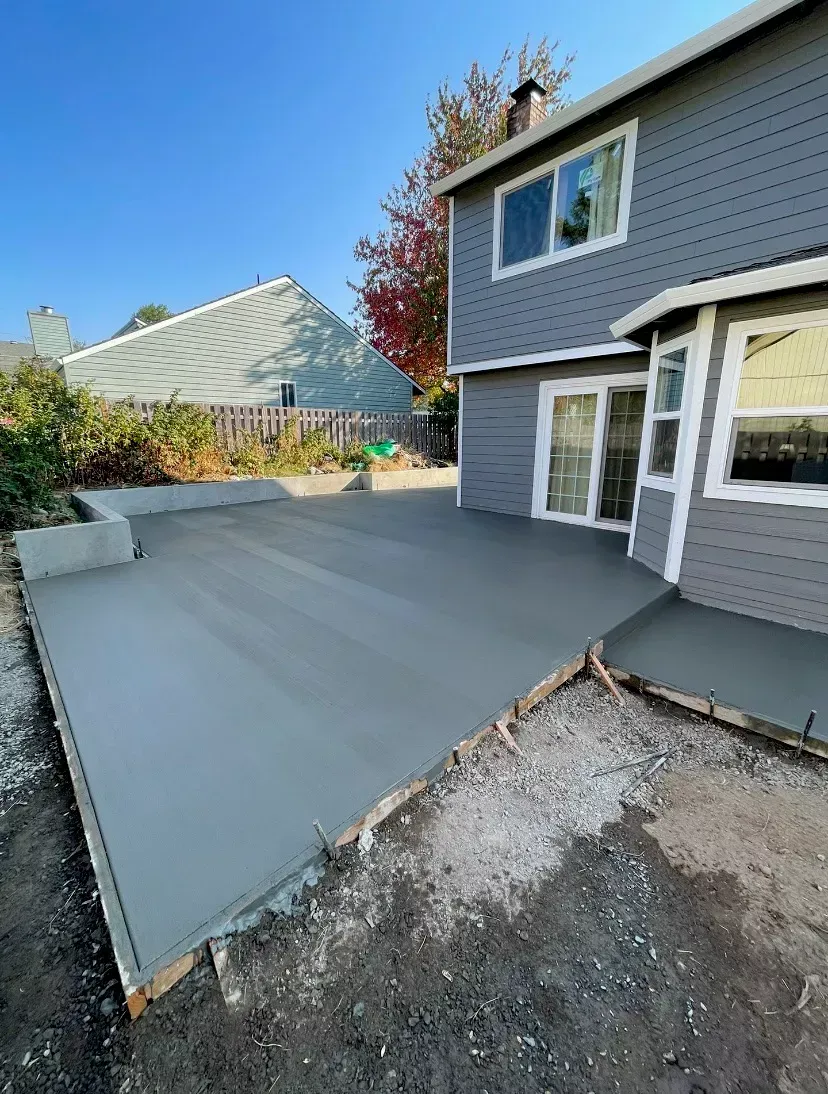
We install slabs with the correct thickness, reinforcement, and grading for the structure you intend to place on top. Site preparation includes excavating to the required depth, compacting the subgrade, and placing a gravel base that drains moisture away from the underside of the slab. Rebar is tied into a grid pattern at specified intervals, and concrete is poured to the thickness required by your project plans. The surface is screeded level, floated smooth, and finished to match the application, whether that means a troweled finish for interior floors or a broomed texture for exterior access.
For slab foundation work in Beavercreek, contact Concrete by Design to review site conditions and project requirements.
What Makes a Slab Foundation Reliable
You receive a poured concrete base that begins with soil compaction testing to confirm the ground can support the intended load. A vapor barrier is laid over the gravel base if moisture control is required, and perimeter forms are set to the exact dimensions of your structure. Rebar placement follows engineering specifications for spacing and overlap, and the concrete mix is selected for compressive strength that matches the load demands of your building.
After the slab cures, you see a flat, level surface with no high spots, no depressions, and no visible cracking beyond the controlled joints. The slab supports the weight of framed walls, roofing loads, and stored materials without flexing or settling unevenly. Concrete by Design monitors curing conditions to prevent rapid moisture loss that causes surface cracking, and we cut control joints to manage shrinkage in predictable lines rather than allowing random fractures.
Anchor bolts or embedded plates can be positioned during the pour if your building design requires them. Slabs are not sealed or coated unless specified, and finishing techniques vary depending on whether the surface will remain exposed or be covered by flooring. Foundation slabs are engineered to local frost depth and load requirements, ensuring compliance with building codes in Beavercreek.
Property owners preparing for new construction often ask about timing, thickness, and site readiness before scheduling a concrete pour.
What You Should Know About Slab Installations
How thick should a garage slab be poured?
Garage slabs are typically poured at four to six inches thick depending on whether the space will support vehicles or heavy equipment, with rebar reinforcement to handle point loads.
What site preparation is required before pouring a slab?
The site must be cleared of organic material, graded to direct drainage away from the structure, and compacted to a density that prevents future settling beneath the concrete.
When can framing begin after a slab is poured?
Framing can typically begin within a week once the concrete reaches sufficient strength to support construction loads, though full curing continues for several more weeks.
Why is rebar necessary in a structural slab?
Rebar holds the concrete together as it shrinks during curing and resists tensile stress that would otherwise cause wide cracks when the slab flexes under load.
How does Beavercreek soil type affect slab performance?
Clay-heavy soils expand and contract with moisture changes, which is why proper base preparation and compaction are critical to prevent differential movement beneath the slab.
Concrete by Design coordinates with builders and property owners to ensure slabs are poured on schedule and meet project specifications. If you need a foundation slab or structural base for an upcoming build, reach out to discuss site conditions and reinforcement requirements.